
- DATE : 18/11/2026 18/11/2026
- TIME : 13:00–14:30
- VENUE : Online Event
2026 Spotlight Taiwan Lecture
Walking One’s Own Way: Chen Chun-Hao and the Reinvention of Landscape
Artist CHEN Chun-Hao 陳浚豪
With Discussant Professor Sabrina Rastelli (Ca’ Foscari University of Venice)
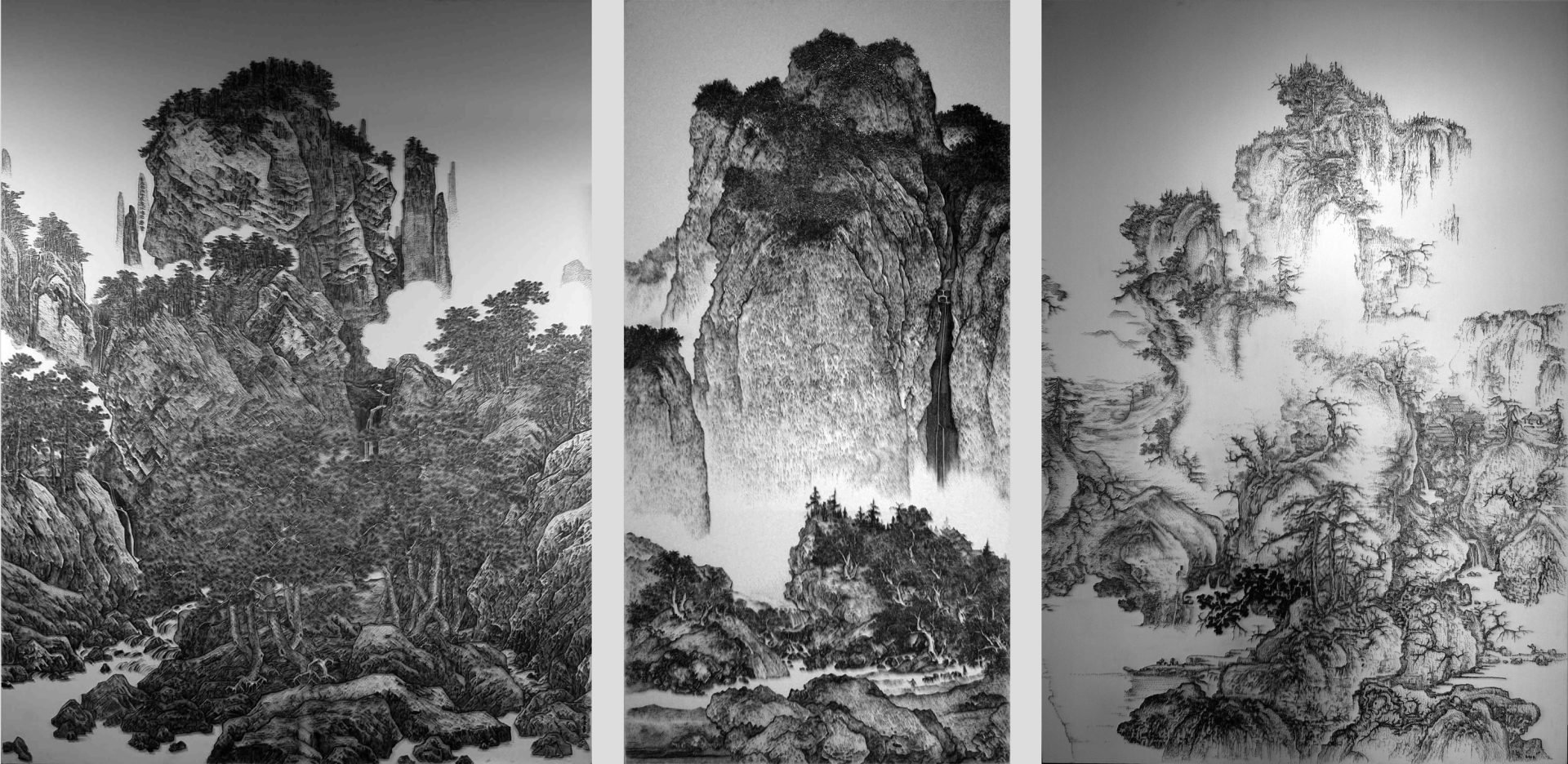
This lecture traces the evolution of my artistic practice over three distinct phases, each marking a shift in medium, method, and conceptual approach. From early explorations in ink line drawing to experimental installations and, more recently, to landscape works constructed through accumulative processes, these stages reflect an ongoing search for an independent artistic language.
The first phase (1991–1997), developed during my university and graduate studies, centers on modouxian (inked guideline) drawing, where line functions as both structure and expression. The second phase (1997–2009) moves toward installation and two-dimensional works using thumbtacks, introducing repetition, tactility, and spatial intervention. The third phase (2009–2026) extends this inquiry into what I term “thumbtack landscapes,” in which traditional landscape imagery is reconfigured through labor-intensive, point-based accumulation.
Across these phases, the lecture considers how artistic practice can depart from established conventions and unfold as a sustained process of “walking one’s own way.”
另闢蹊徑:走自己的路
藝術家陳浚豪
與談人 威尼斯大學藝術史Sabrina Rastelli 教授
本講座以藝術家陳浚豪的創作歷程為主軸,回顧其自1991年至今的發展,並從三個階段梳理其媒材轉換與觀念演進。在持續的實驗與轉化之中,其創作逐步開展出一條有別於既有範式的藝術路徑,並形塑出鮮明而獨特的視覺語言。
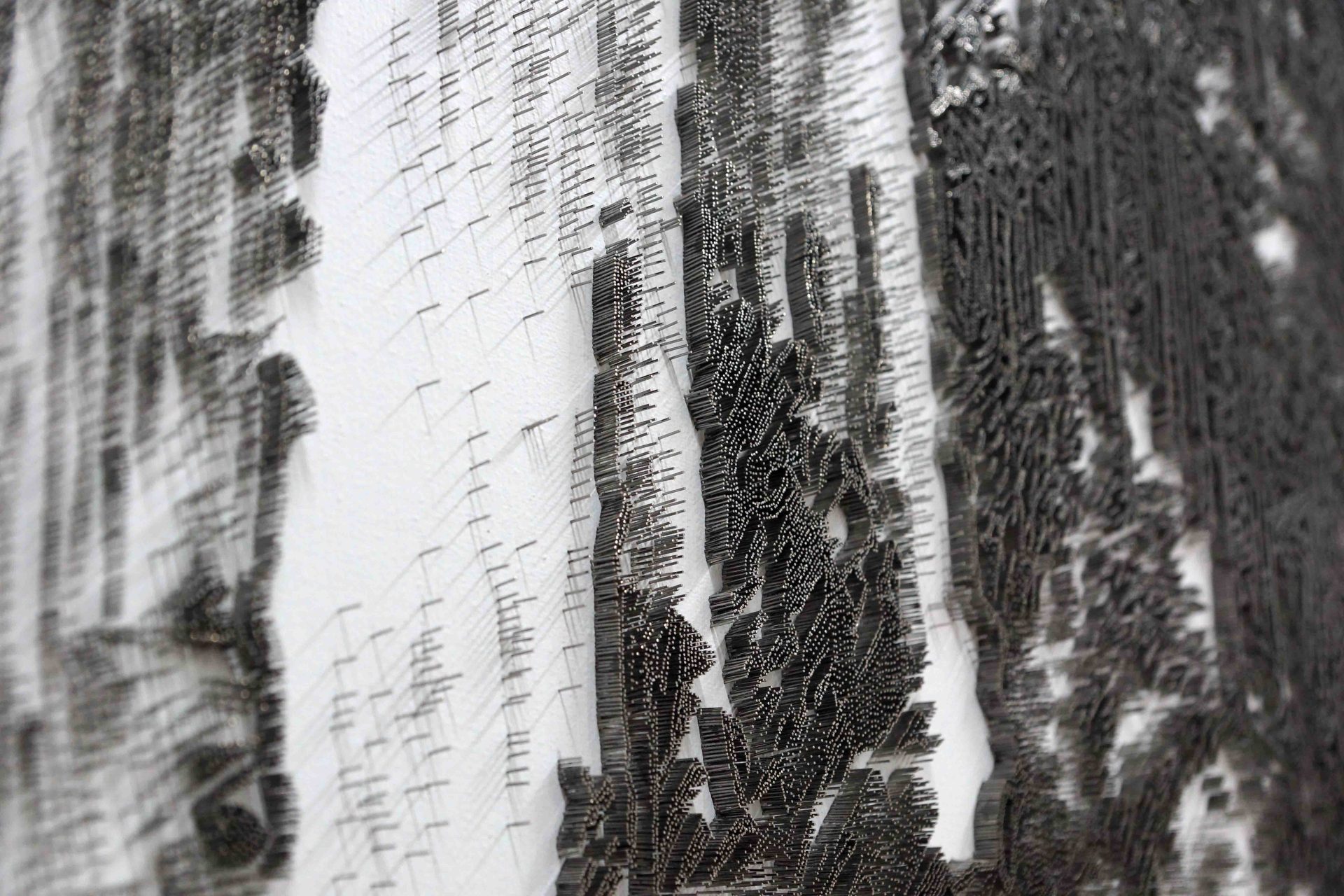
第一階段(1991–1997)始於大學至研究所期間,以「墨斗線畫」為核心,著重線條的結構性與生成邏輯,奠定其對形式與秩序的基礎探索。第二階段(1997–2009)轉向圖釘作為主要媒材,發展出結合裝置與平面作品的創作方式,透過重複、堆積與物質性的介入,重新界定畫面與空間之間的關係。第三階段(2009–2026)則進一步發展為「蚊釘山水」,將傳統山水圖式轉化為由細微釘件累積而成的視覺結構,在延續與重構之間,開展出一種具當代性的山水語言。
透過這三個階段的梳理,本講座將探討陳浚豪如何在傳統與當代之間持續轉譯與重構,並藉由其獨特的創作方法,開闢出一條屬於自身的藝術道路。
About the Speaker
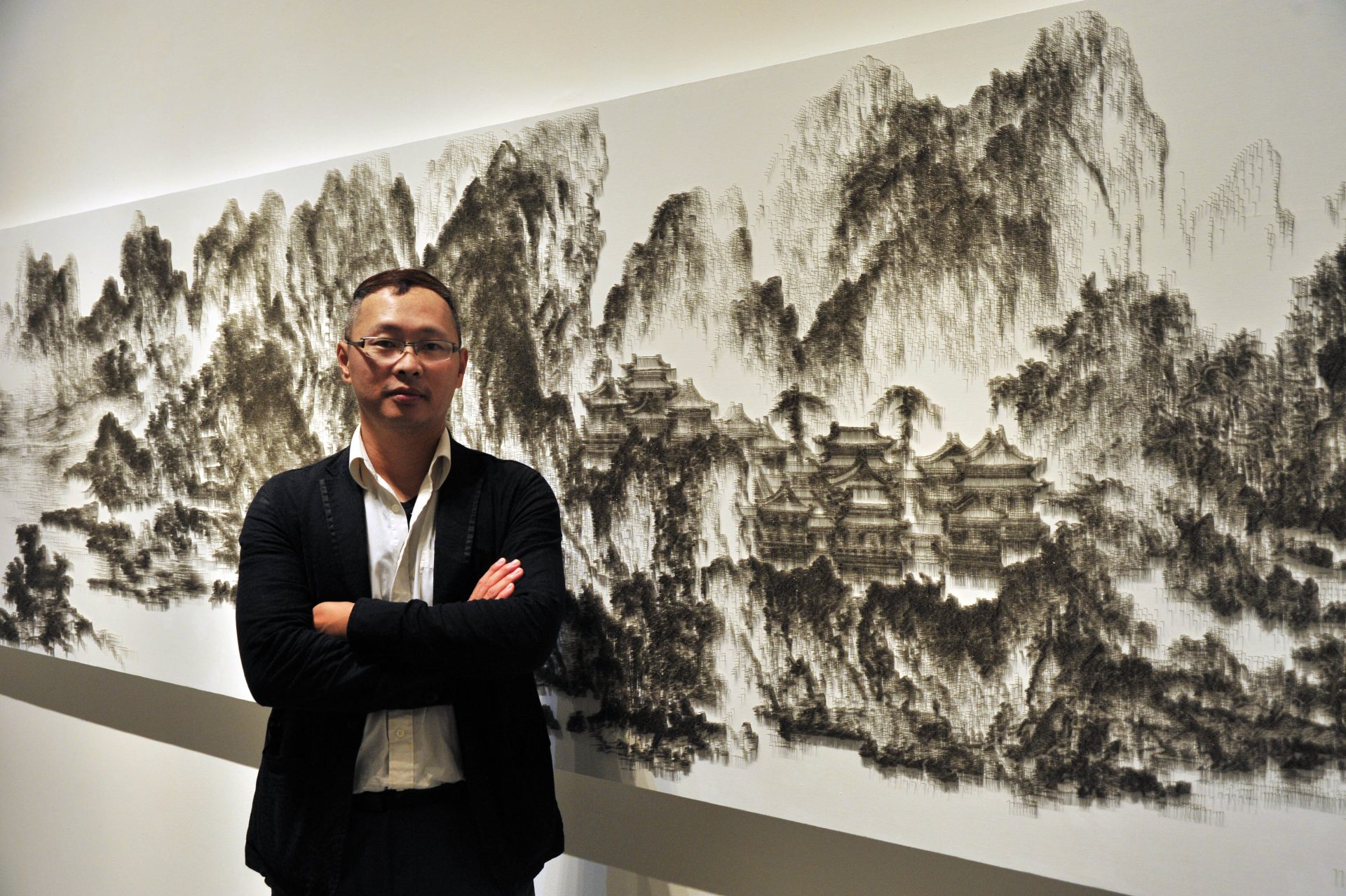 Chen Chun-Hao (b. 1971) received a bachelor’s degree in fine arts from the Taipei National University of the Arts (1996) and a master’s degree in plastic arts from the National Tainan University of the Arts (1998). In addition to working as an artist, he has a long career as a curator and director of arts organisations. He is a member of the VT Artsalon in Taipei, where he has also exhibited his work.
Since 1997, Chen has experimented with the use of industrial materials in his work, such as thumbtacks. For the “Mosquito Nail Shan Shui” series, Chen carefully emulates landscape paintings found at the National Palace Museum, Taipei and abroad, by placing diminutive mosquito nails on canvas. After precise calculations, for his first completed piece, Early Spring for the Mosquito Nail (2010), Chen used a specially designed nail gun to place as many as 400,000 stainless steel mosquito nails on canvas. Enlarging the original Early Spring (1072), he then carefully replaced the ink of the scroll with the mosquito nails, which protrude about one centimetre from the canvas. Each nail punctures the surface of the canvas, at the same time conjuring a three-dimensionality that accentuates the work’s otherworldliness.
Chen Chun-Hao has exhibited internationally, including at Freize Cork Street No. 9, London (2025), National Taiwan Museum of Fine Arts (2014, 2012); Asia Museum of Modern Art (2013); Tenri Cultural Institute, New York, NY, U.S. (2013); MOCA Taipei (2012). His solo exhibitions include The Myriad Doors of Existence, Tina Keng Gallery, Taipei (2024); Meandering Toward the Clouds, Tina Keng Gallery, Taipei (2020); Once Upon an Otherworldly Realm, Tina Keng Gallery, Taipei (2017); Reclaiming the Lost Territories, Tina Keng Gallery, Taipei (2014); Mosquito Nail Shan Shui, Tina Keng Gallery, Taipei (2011); The Way of Nailing, VT Artsalon, Taipei (2011); Maze, VT Artsalon, Taipei; and Aura Beyond, Taipei Fine Arts Museum, Taipei (2001).
About the Discussant
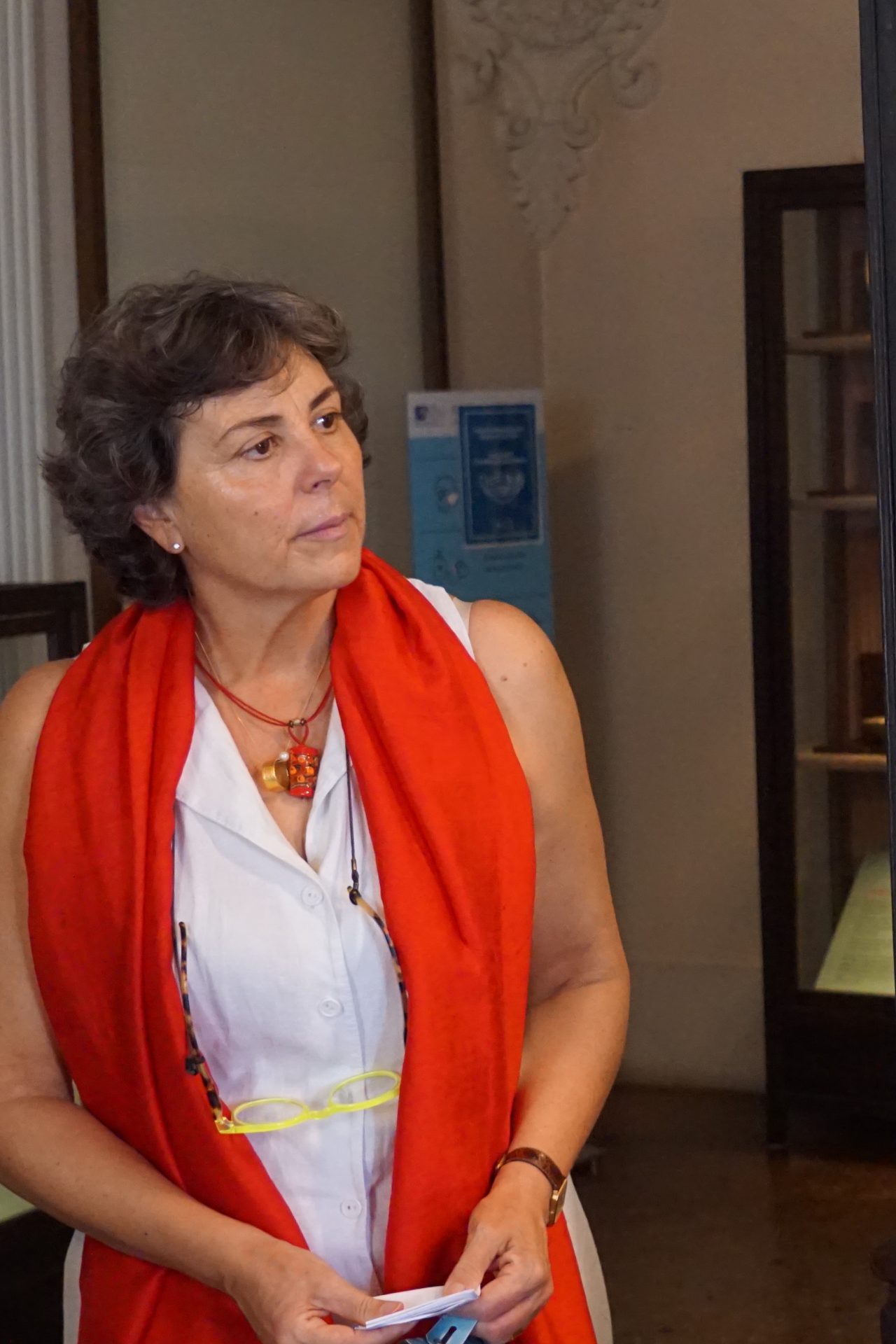 Professor Sabrina Rastelli is Full Professor of Chinese Archaeology and History of Art at Ca’ Foscari University of Venice, where she has taught since 1999. She received her BA from Ca’ Foscari University (1993) and her PhD in Chinese Art and Archaeology from the School of Oriental and African Studies (SOAS), University of London (2002). Prior to her doctoral studies, she conducted research at Northwest University in Xi’an, further developing her expertise in Chinese language and archaeology.
Her research spans Chinese ceramics, the historiography and contextualisation of Chinese art, and modern and contemporary art. Through an interdisciplinary approach combining archaeological, technological, and textual evidence, she reconstructs ceramic production processes and situates them within their historical contexts. Her work also critically reconsiders Chinese art beyond both Western-centric frameworks and Sinocentric narratives, examining it within broader political, social, and cultural formations. In the field of modern and contemporary art, she has contributed extensively as a consultant to the Treccani Encyclopaedia of Contemporary Art, coordinating a major international scholarly project on Chinese art across mainland China, Hong Kong, and Taiwan.
Professor Rastelli is the author of numerous publications, including three monographs and several exhibition catalogues, and regularly presents her research at international conferences. She has held teaching and research appointments at institutions including Peking University, Hanoi University, and the University of Zurich, and has been a Visiting Fellow at Peking University and the Institute of Chinese Studies at the Chinese University of Hong Kong. She has also participated in the Mellon Chinese Object Study Workshop at the Freer Gallery of Art and Arthur M. Sackler Gallery, Smithsonian Institution.
Her curatorial work includes major international exhibitions such as China: Birth of an Empire (Scuderie del Quirinale, 2006), China at the Court of the Emperors (Palazzo Strozzi, 2008), The Celestial Empire (Turin, 2008), and The Two Empires: The Eagle and the Dragon (Milan and Rome, 2010), as well as Vivid Transparencies: Yaozhou Wares from the Shang Shan Tang Collection (Venice, 2022). She also co-curated the solo exhibition of the Korean artist Yeesookyung, Whisper Only to You (Naples, 2019).
Professor Rastelli is Editor-in-Chief of the Marco Polo Book Series: Studies in Global Europe–Asia Connections and serves on the editorial boards of several academic journals. She is an active member of leading scholarly societies, including the Oriental Ceramic Society, the European Association for Asian Art and Archaeology, and the Society for East Asian Archaeology.