
- DATE : 04/11/2026 04/11/2026
- TIME : 13:00–14:00
- VENUE : Online Event
2026-2027 History of Art Research Seminar
Supported by 2026 Spotlight Taiwan Lecture
In-person and online. Register Here
Beyond Print:
Material, Time, and Perception in the Making of a Work
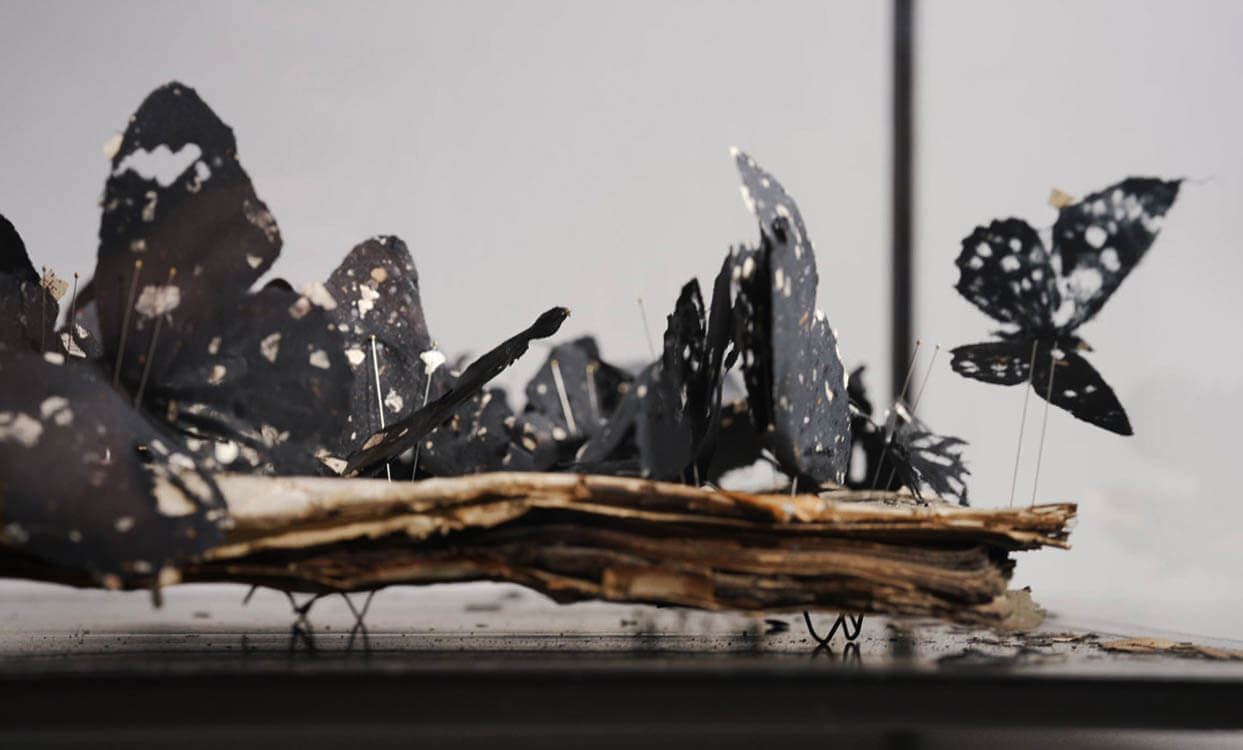
Artist Chung-ming YANG
In the process of making, I often encounter what feels like a pre-existing structure, something not entirely invented, but gradually coming into recognition. The repeated cycles of trial, revision, and return suggest not a linear progression, but an accumulation and compression of time. Faced with the same rock, one person may read time, another may perceive form. For the maker, it emerges instead as an internal structure, one that becomes legible only through sustained engagement. This lecture begins with the question of how a work comes into shape and reflects on several structural conditions that have consistently surfaced in my recent practice.
These include the role of material in the emergence of an image, the ways in which time enters both the process of making and the act of viewing, and how perception itself is reconfigured under these conditions. Within this framework, printmaking is approached less as a technical category than as a set of operative conditions: transfer, delay, repetition, and trace, through which the relationship between form and perception can be materially and perceptually engaged.
The lecture unfolds through a series of interrelated questions that move gradually from process to perception. It begins by reconsidering printmaking not as a medium, but as a set of operative conditions. Through transfer, delay, and accumulation, images are not simply produced, but come into presence, altering the terms under which they are perceived.
My work also engages with questions of perception and duration. While certain works tend toward immediate recognition, others introduce a condition of hesitation. When an image is fragmented, obscured, or deferred, the act of viewing no longer resolves at once, but instead unfolds over time, requiring sustained and attentive engagement. Time then emerges not as a background condition, but as something that actively participates. Processes such as layering, drying, and repetition resist compression, leaving durations embedded within the work. These temporal traces do not disappear upon completion, but continue to shape how the work is encountered.
Material is approached in a similar way, not as a passive support, but as something that participates in what appears. The density of paper, the behaviour of its fibres, and the variability of impression all contribute to outcomes that cannot be fully anticipated, arising instead through a sustained interaction between process and material. As these conditions shift, so too does the position of the viewer. What might initially seem like a stable point of observation becomes subtly unsettled. Perception is held in suspension, not yet resolved, allowing the work to remain open rather than fixed.
The question of completion returns at the end, not as a fixed conclusion, but as a moment of recognition. A work comes into its own as perception begins to slow, as material exceeds its role as mere means, and as something persists that resists full articulation. It is within this condition that the work is able to stand on its own.
About the Speaker
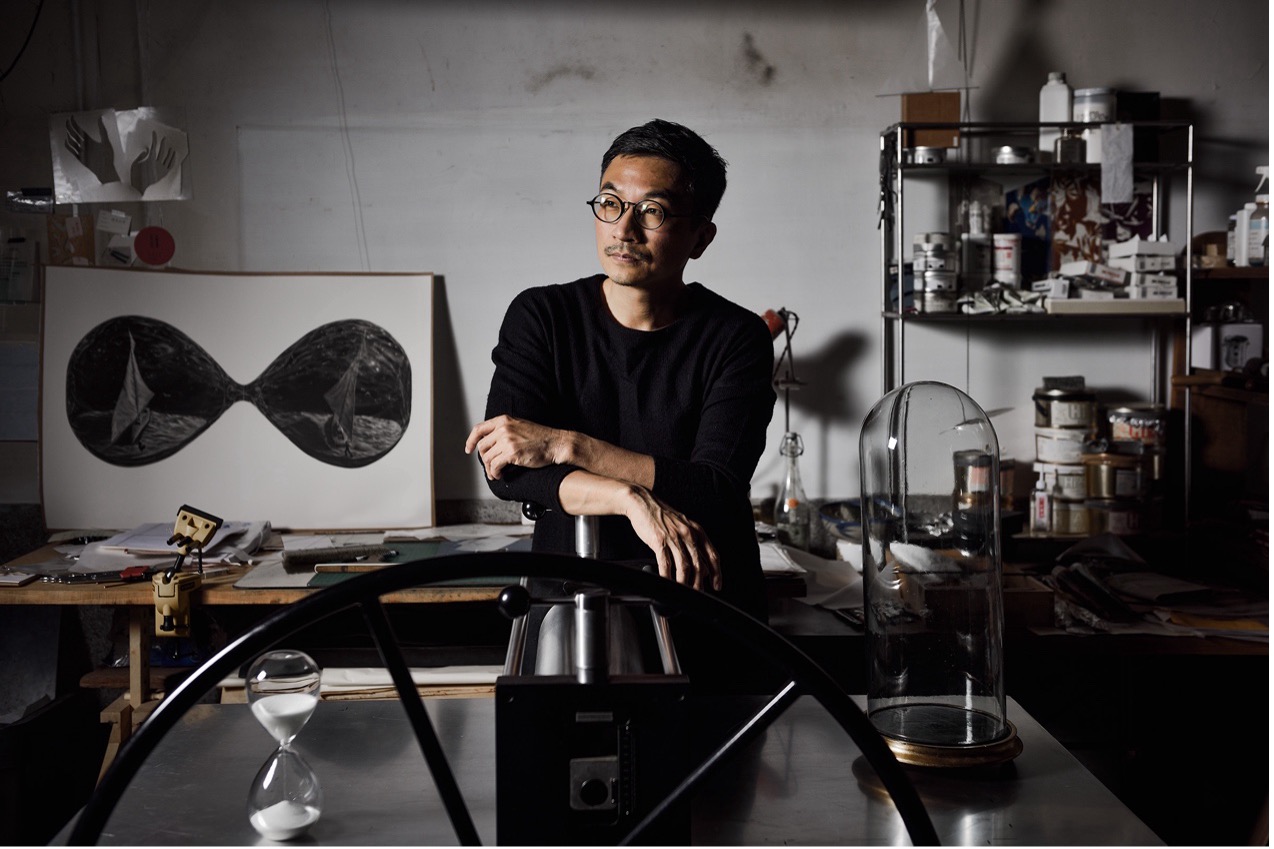 Chung-ming Yang (b. 1974) is a leading Taiwanese printmaker whose work expands the expressive boundaries of the medium. Educated at the National Taichung University of Education (BFA, 1998) and Tainan National University of the Arts (MFA, 2001), he founded the 324 Print Studio in 2003 as both a creative and pedagogical platform for advancing printmaking in Taiwan. Yang’s practice centres on time, material, and the quiet resonance of form. Working across printmaking, painting, and installation, he approaches technique as a vehicle for thought and emotion rather than mere craftsmanship. His use of handmade paper, fibre structures, and botanical materials reflects a deep sensitivity to process and the passage of time.
Yang’s art has been exhibited widely in Taiwan and abroad, with major solo exhibitions at Gallery de Sol in Taipei and presentations in Europe and Japan. His works are held in prominent collections, including the National Palace Museum in Taipei, where he is the only contemporary printmaker represented. Through a meticulous, meditative approach, Yang reimagines printmaking as a dialogue between material and spirit. His quiet, reflective works bridge traditional craftsmanship and contemporary sensibility, embodying a distinctly Taiwanese vision of time, memory, and making.