

- DATE : 17/10/2024 17/10/2024
- TIME : 17:15–18:15
- VENUE : Hunter Lecture Theatre, 74 Lauriston Place
Cityscapes at the Qianlong Emperor’s (1736-1795) Court: The Rise of Spatial Performativity and Imperial Territoriality
Professor Cheng-hua Wang (王正華)
Princeton University
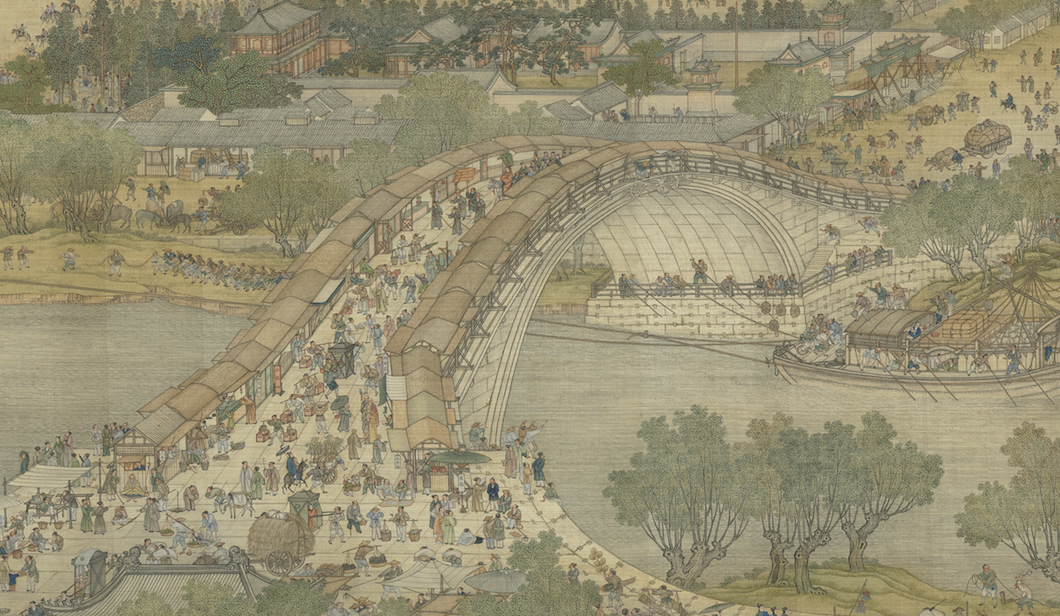
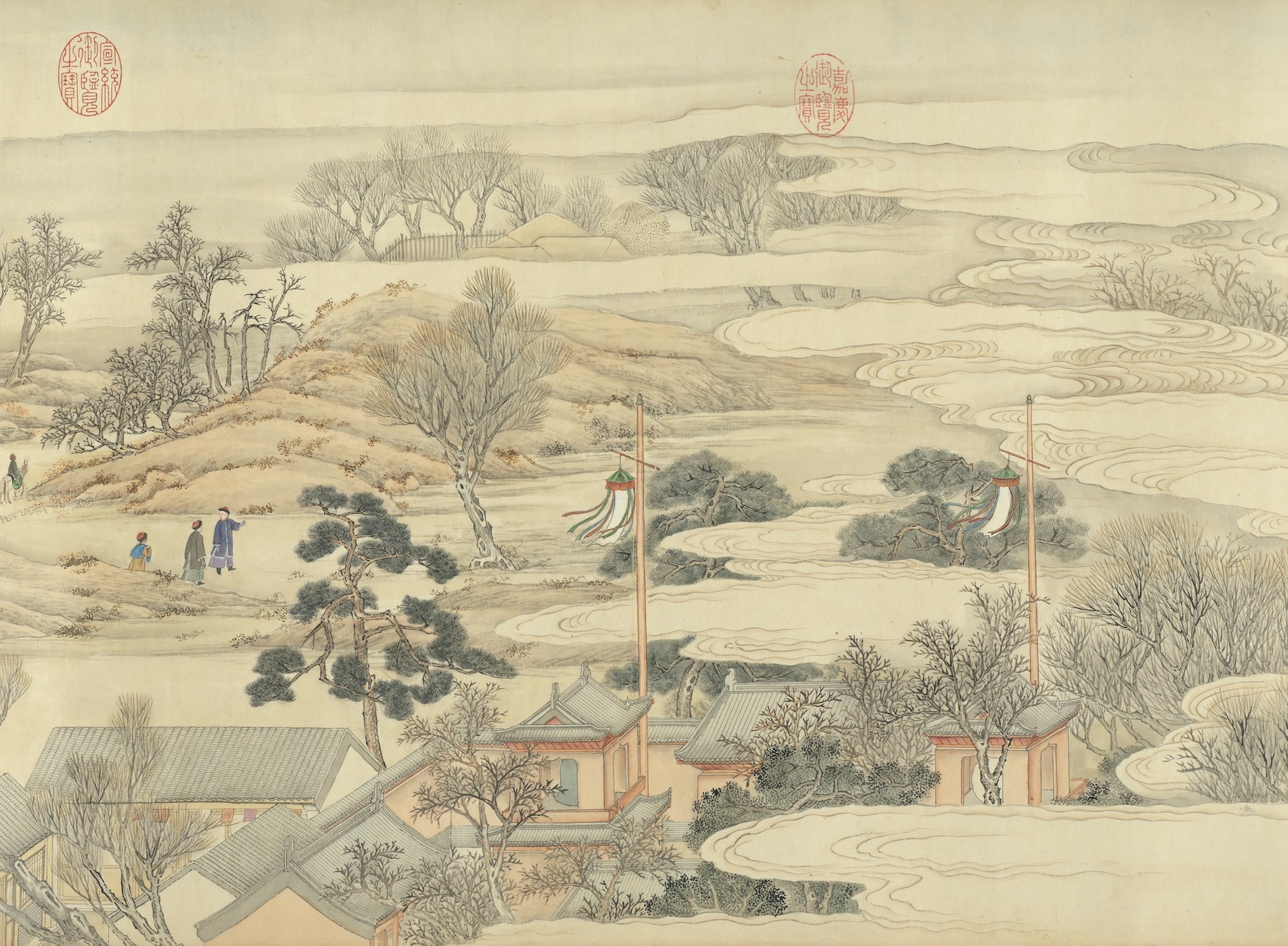
This lecture aims to discuss two issues arising from the study of eighteenth-century Chinese cityscapes mostly made at the Qianlong emperor’s (1736-1795) court. The first regards the spatial performativity of streets and urban landmarks reified in paintings, and the second probes the sense of territoriality constructed through the concretely depicted fabric of cities. Two of the paintings in focus are in the collection of the National Palace Museum, Taipei, respectively titled Qingming shanghe 清明上河 (Up the River during Qingming) from 1737 and Riyue hebi wuxing lianzhu 日月合璧五星聯珠 (Syzygy of the Sun, Moon and Five Planets) from 1761.
To begin with, cityscapes emerged as a pictorial institution in the late Ming period (ca. 1550s- 1644); at that time, images of cities pivoted around the streetscape, where consumerism dominated. Into the eighteenth century, cityscapes in the form of paintings further explored the spatial performativity of streetscapes. In these paintings, the web of streets, shops, and residential units is turned into stages, and theatricality becomes a vital characteristic. Meanwhile, cities such as Beijing and Suzhou reveal their urban fabric with built environs in painted city views, with an effect of veristic mapping as a topographical landscape. This new feature proffers a sense of territoriality, particularly to the ultimate viewer of these paintings—the Qianlong emperor.
This talk is also intended to tackle how the court mobilized resources for the creation of these cityscapes, such as court painters recruited from Suzhou, and the mechanisms and operations through which territorial paintings were produced. In addition, while the seventeenth century that spans the late Ming (ca. 1550s-1644) and early Qing (1644-ca. 1700s) dynasties has been extolled as one of the greatest ages of Chinese landscape painting, the eighteenth century seems to pale in comparison in terms of the gravity and diversity of this most commendable genre of Chinese painting. However, topographical landscapes witnessed an impressive surge at the Qianlong court. One wonders how to interpret and evaluate such changes from the perspective of landscape painting traditions in China, hence the topic of this talk.
About the Speaker:
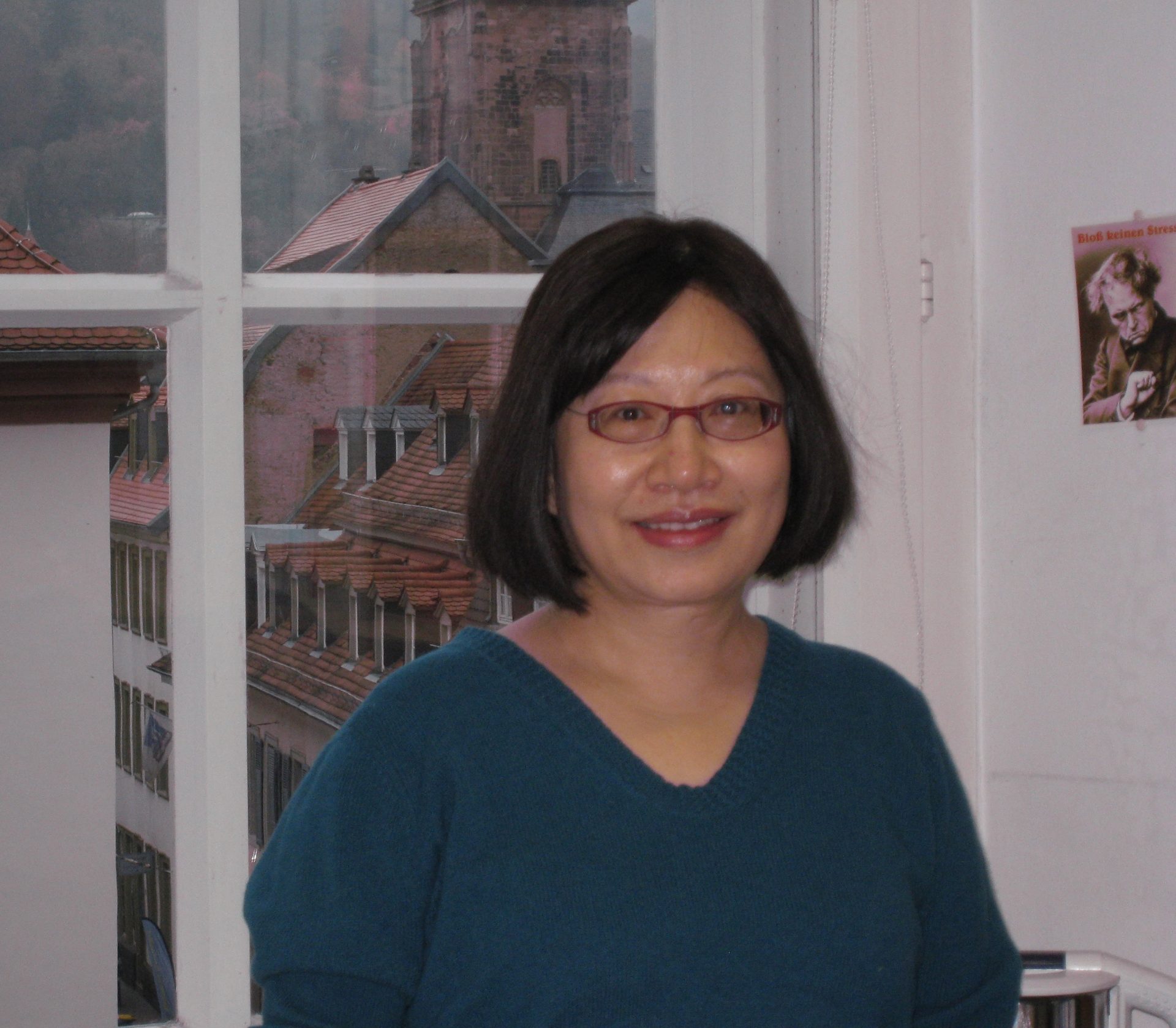 Professor Cheng-hua Wang
Cheng-hua Wang, a specialist in Chinese painting and visual culture, is Associate Professor at Princeton University. She has published widely in both Chinese and English. Two anthologies of her articles in Chinese have been published respectively in 2011 and 2020. Her English-language publications have appeared in different journals and edited volumes, and an anthology of some of these articles translated into Chinese came out this June. In addition, her book Up the River of Time: The Qingming Shanghe Painting Tradition in China will come out next year. It addresses issues regarding the construction of a painting tradition and cultural constellation through thematic links and the complicated interrelationship between a primordial artwork and its later “reproductions” from a long historical perspective. Her next book project will explore the concept of territoriality and the transformation of landscape painting in eighteenth-century China that involved the court and Suzhou.